Campaign 1 Before you reply, stop and verify · October – December 2026

Did you get an unexpected call or message? Learn to verify before you act

Fraud attempts can arrive by text message or phone call and look like real communications. They may use well-known names, similar numbers, prizes, threats or urgent requests. A single sign does not prove fraud on its own, but it is a reason to stop and verify.

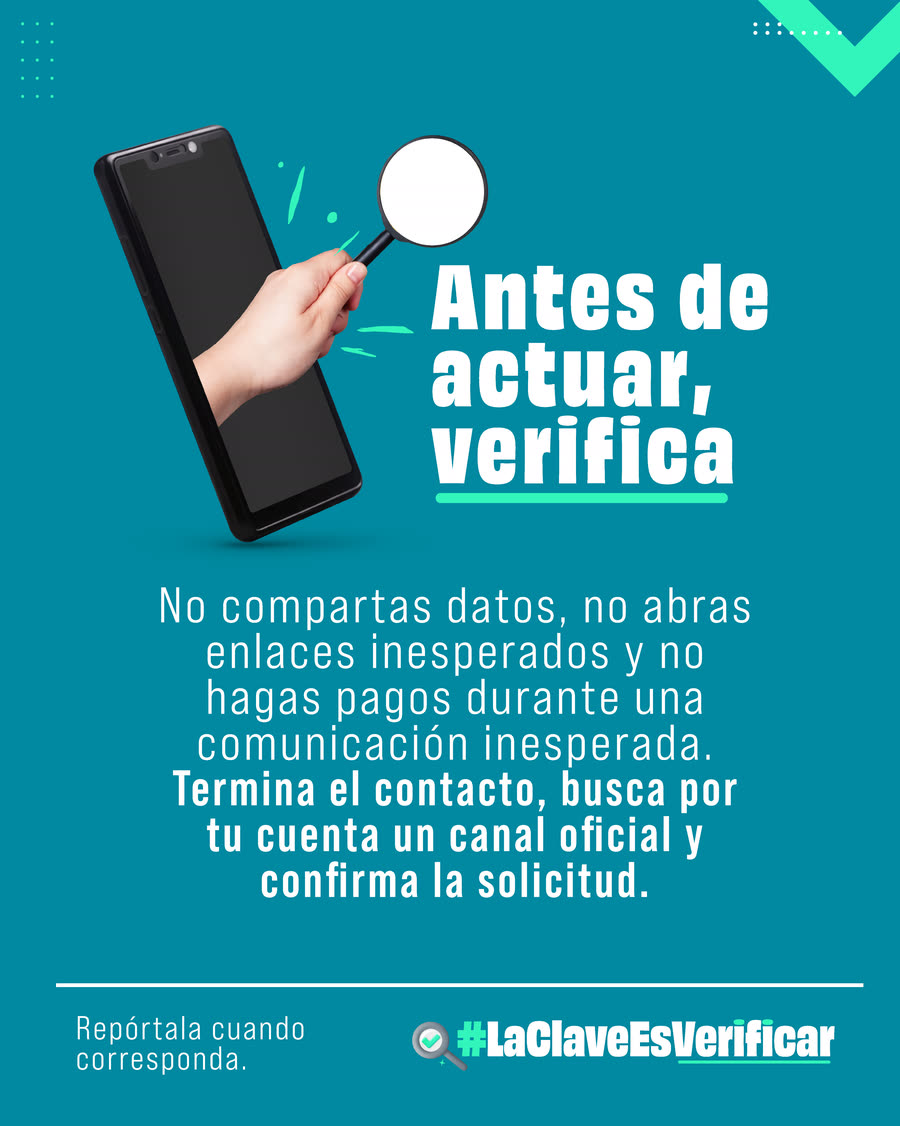
Don’t share data, don’t open links you weren’t expecting and don’t make payments during an unexpected communication. End the contact, find an official channel yourself and confirm the request. Report it through the official route when appropriate. #LaClaveEsVerificar

#LaClaveEsVerificar · Campaign 1

What you need to know

Your personal data

You have the right to know how your personal data is used and to ask for it to be updated or rectified (corrected) when it is incomplete, outdated or wrong. When you get an unexpected request, don’t share passwords, authentication codes or financial information. Use the channels set up by the organization to exercise your rights.
How they can contact you

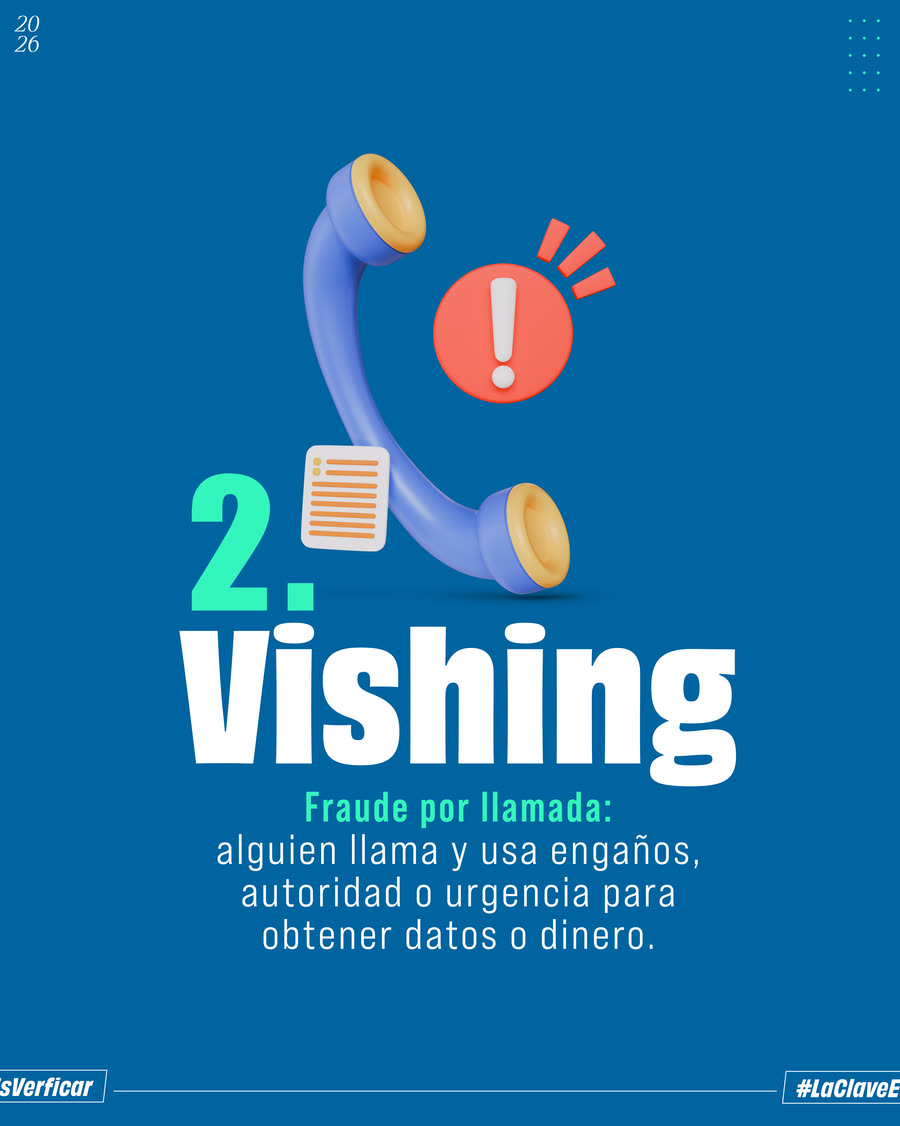
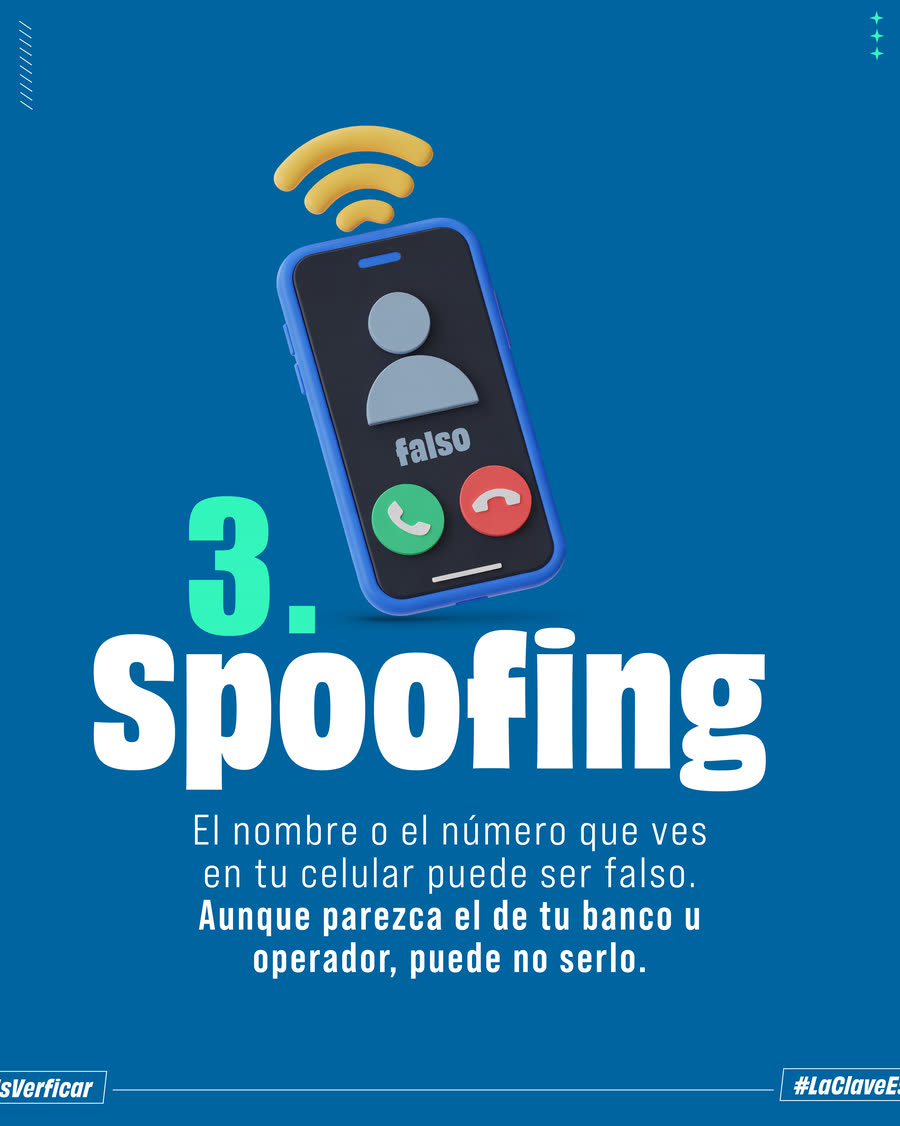
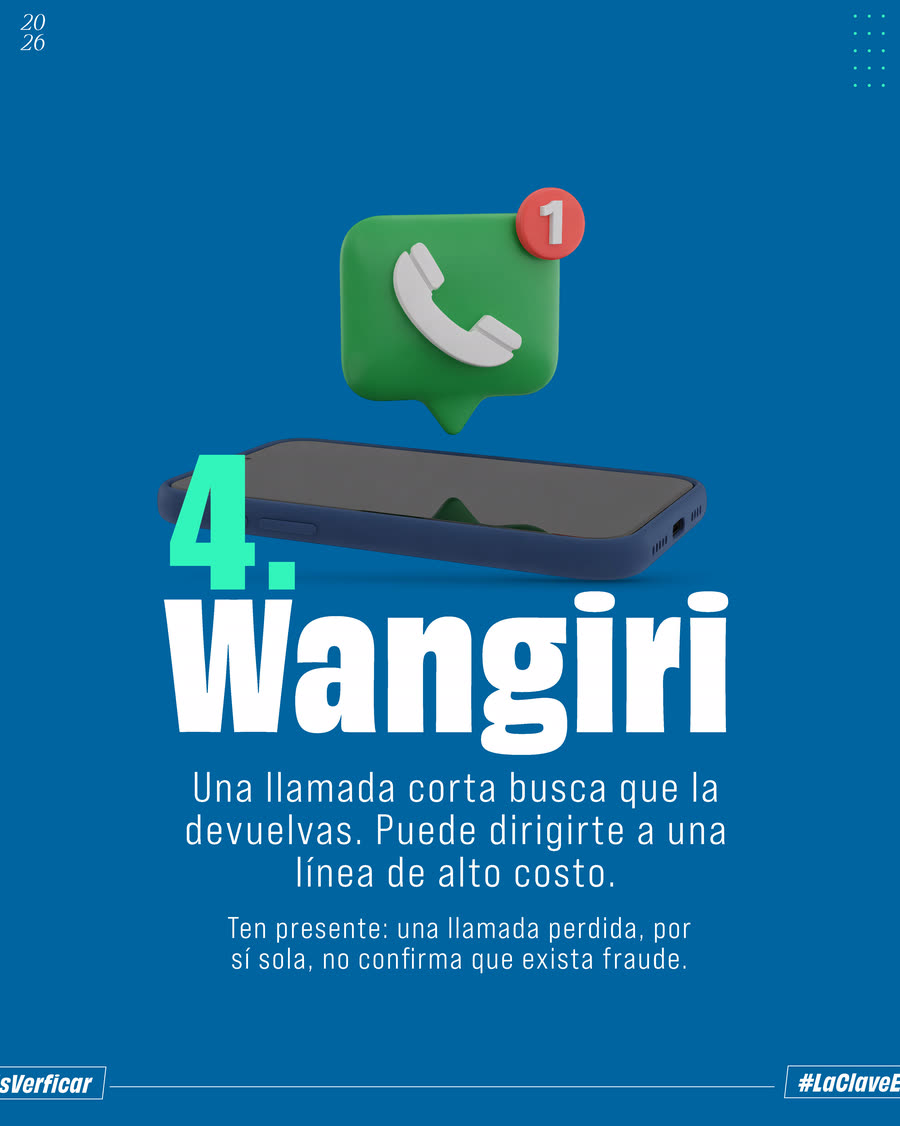
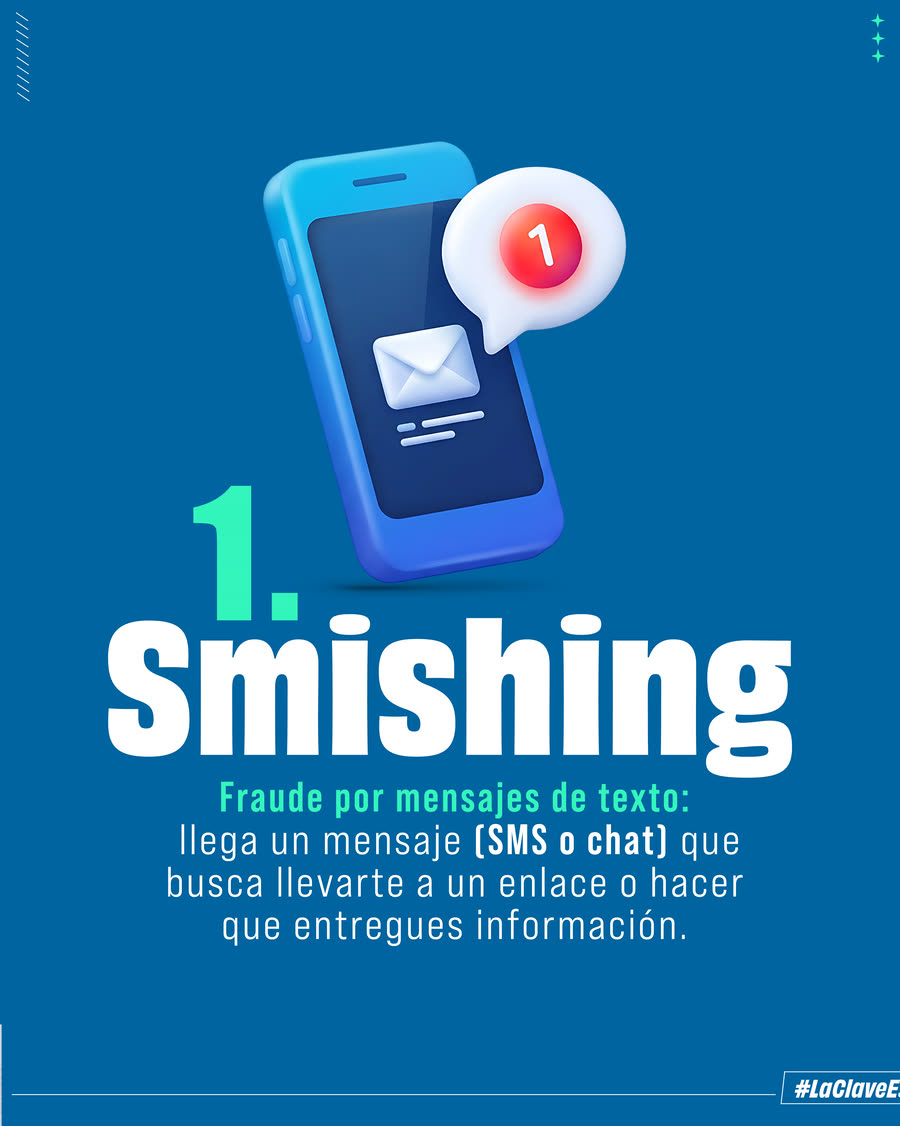
Smishing uses messages to lead you to links or ask for information. Vishing uses calls and deception to obtain data. Spoofing alters or fakes the caller ID you see. Wangiri leaves a missed call to get you to call back, sometimes to premium-rate lines.

Signs that call for a pause

Unexpected requests for passwords, codes, payments or financial data; links you weren’t expecting; unsolicited prizes; threats; pressure to act right away; or instructions to keep the conversation secret.

What to do

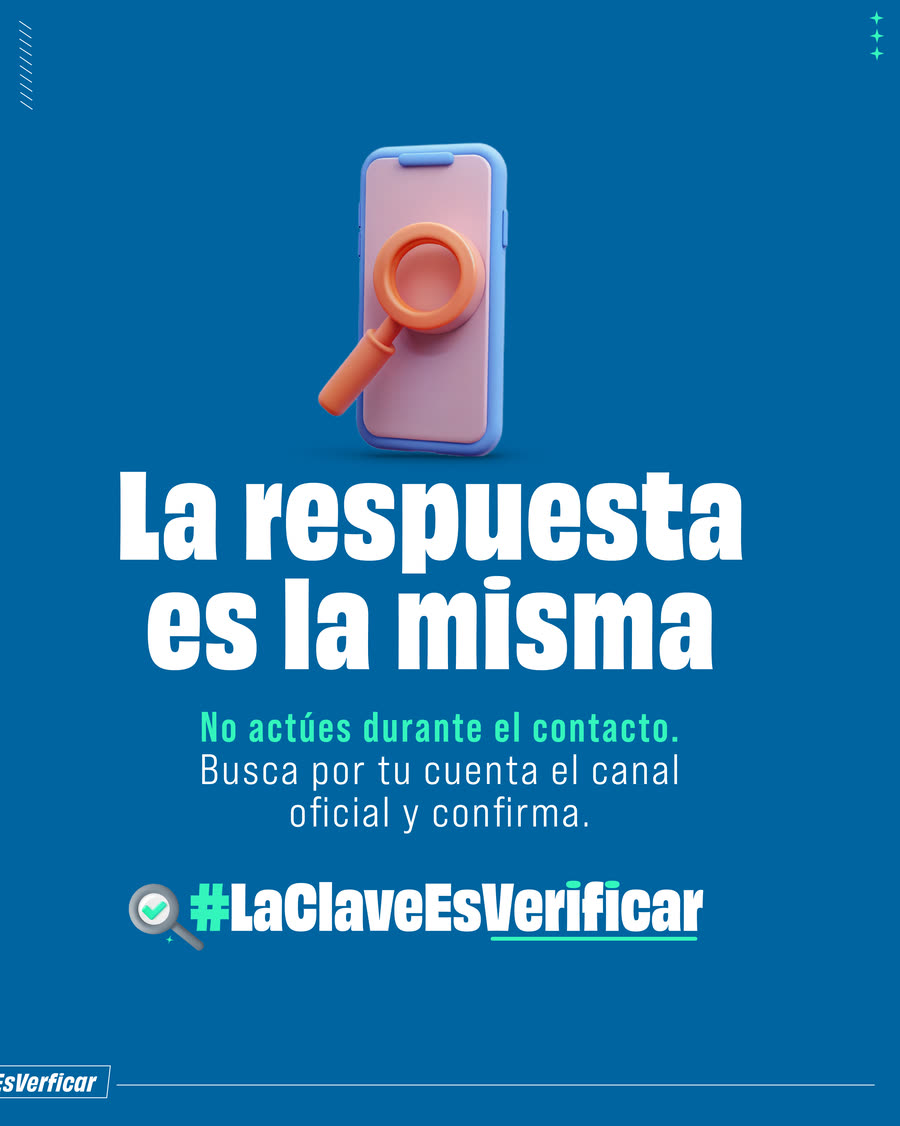
Close the message or end the call. Don’t share information or open links you weren’t expecting. Look up the official website, app or phone number yourself and confirm whether the request is real.

If you already acted

Before you block or delete the contact, keep the message, the number, the link and any receipts. Change any passwords you shared, contact the organization involved through its official channels and use the appropriate guidance and reporting route.

Carousel: Four ways a fraud can start
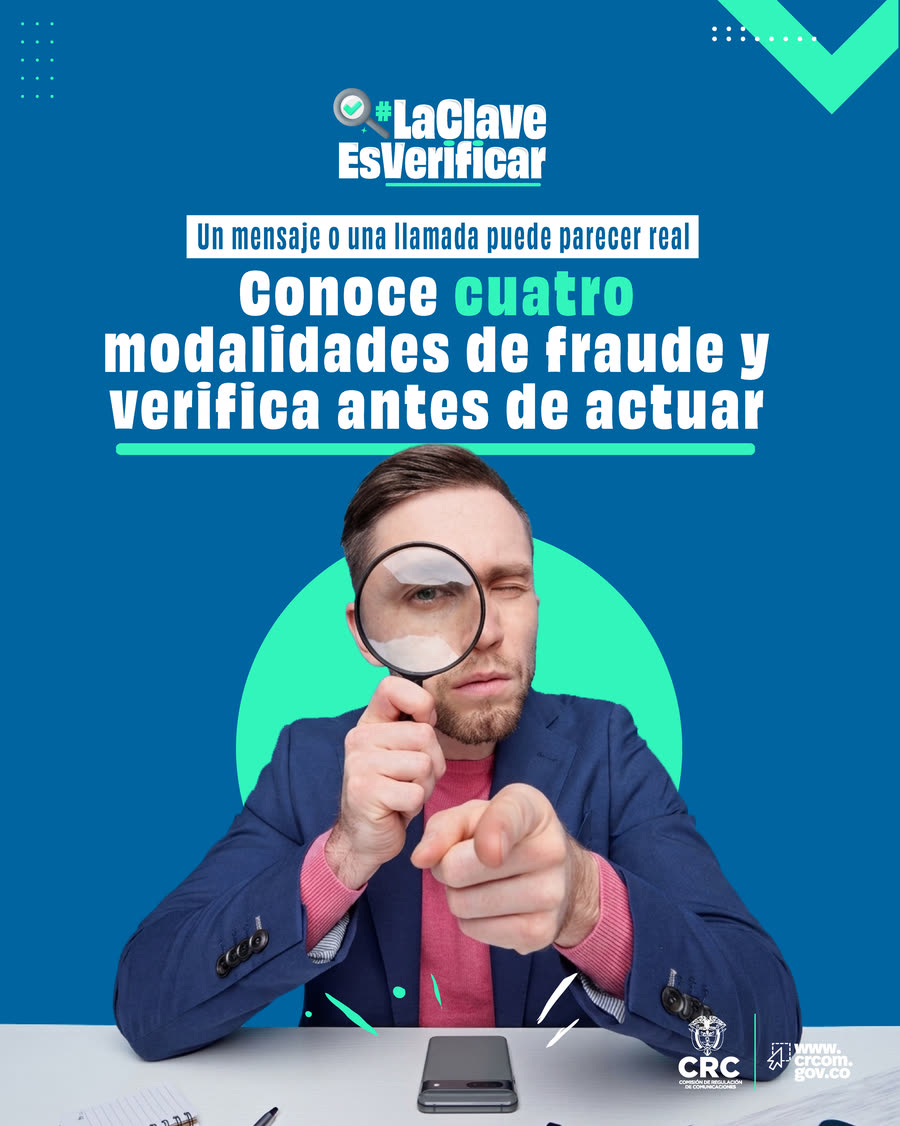
  1. Carousel cover for #LaClaveEsVerificar. A man looks through a magnifying glass. Text (Spanish): A message or a call can look real. Learn four kinds of fraud and verify before you act. CRC logo and www.crcom.gov.co.Slide 1 / 7
  2. Illustration of a phone with an envelope and a notification. Text (Spanish): 1. Smishing. Text message fraud: a message (SMS or chat) tries to lead you to a link or get you to hand over information.Slide 2 / 7
  3. Illustration of a telephone with an alert sign. Text (Spanish): 2. Vishing. Call fraud: someone calls and uses deception, authority or urgency to get data or money.Slide 3 / 7
  4. Illustration of a phone with an incoming call from a contact labeled fake. Text (Spanish): 3. Spoofing. The name or number you see on your phone can be fake. Even if it looks like your bank or carrier, it may not be.Slide 4 / 7
  5. Illustration of a call icon with a notification above a phone. Text (Spanish): 4. Wangiri. A short call tries to get you to call back. It may lead you to a premium-rate line. Keep in mind: a missed call on its own does not prove fraud.Slide 5 / 7
  6. Illustration of a phone with a magnifying glass. Text (Spanish): The answer is the same. Don’t act during the contact. Find the official channel yourself and confirm. #LaClaveEsVerificarSlide 6 / 7
  7. Carousel end card with the Communications Regulation Commission (CRC) logo and www.crcom.gov.co.Slide 7 / 7
Carousel: Six signs to stop and verify
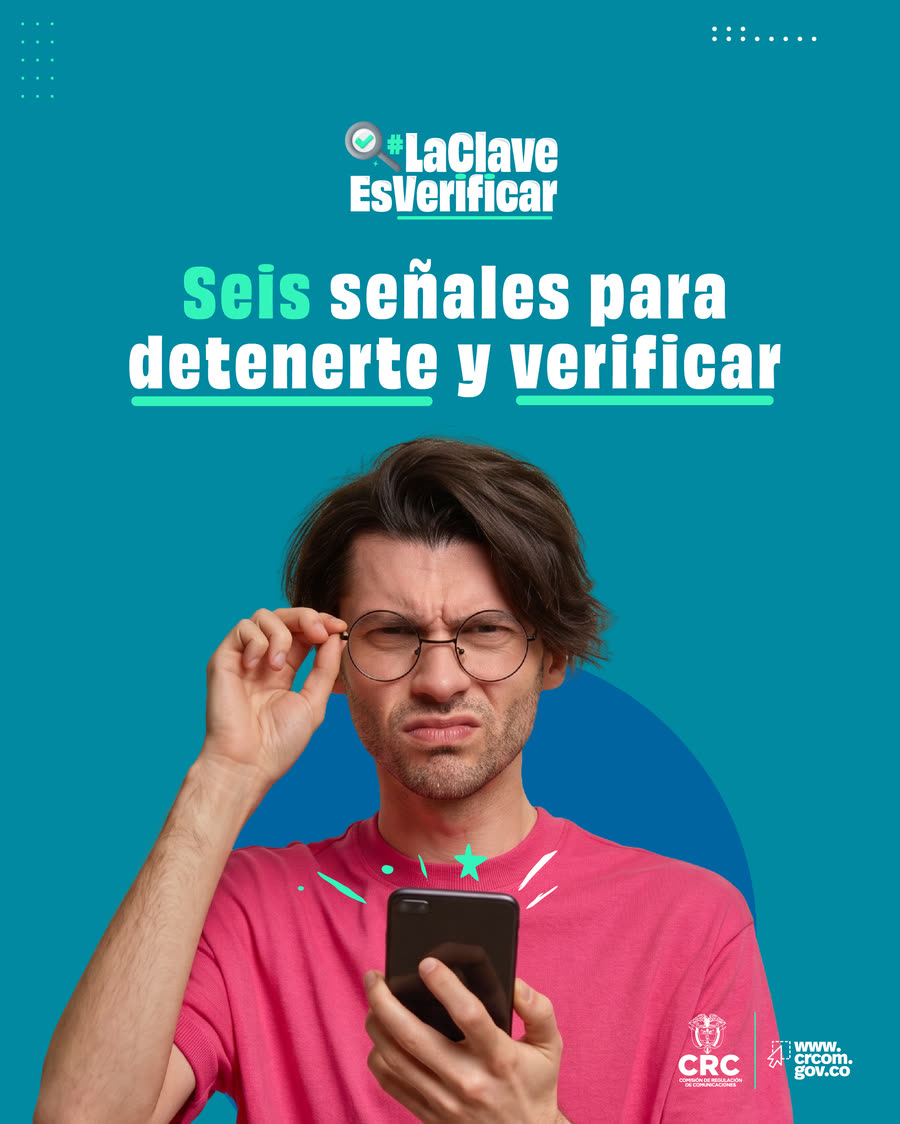
  1. Carousel cover for #LaClaveEsVerificar. A man looks at his phone with suspicion. Text (Spanish): Six signs to stop and verify. CRC logo and www.crcom.gov.co.Slide 1 / 7
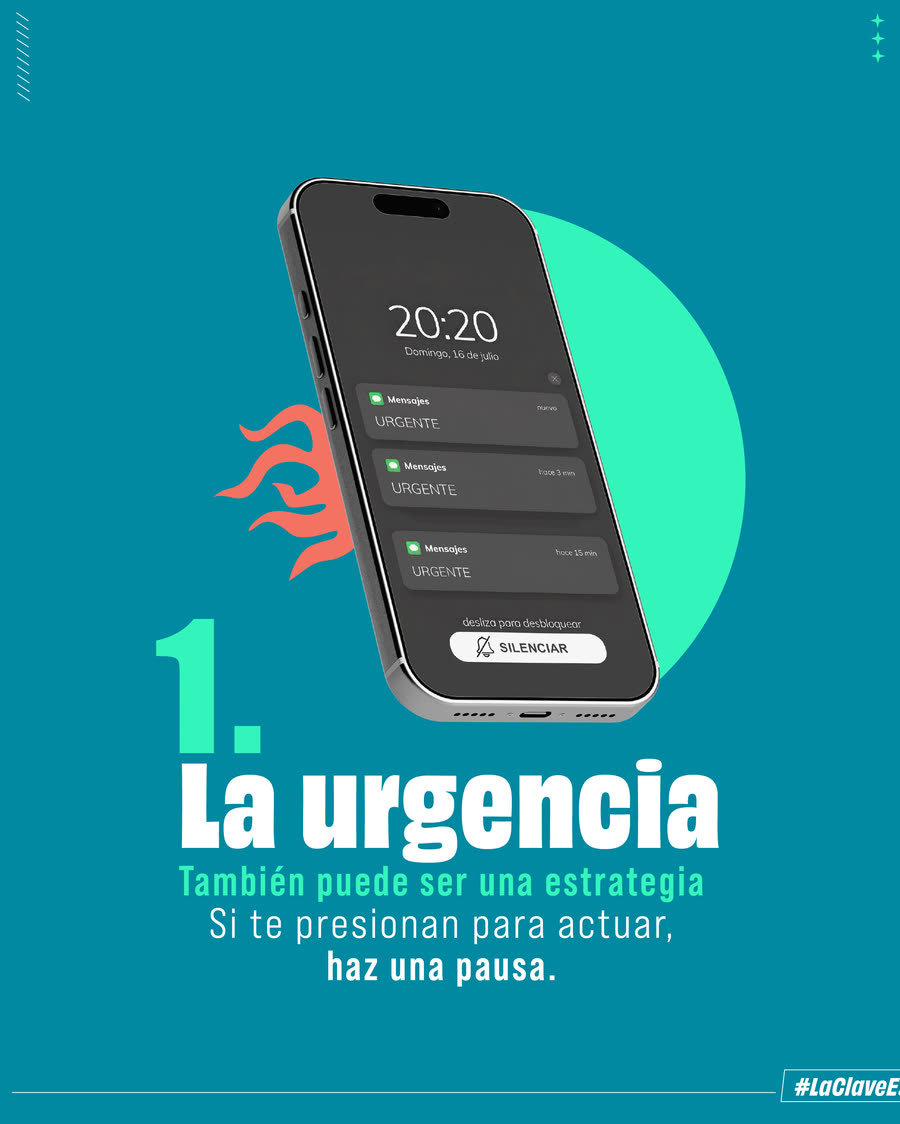
  2. Phone showing several notifications that say URGENT. Text (Spanish): 1. Urgency can also be a tactic. If you’re pressured to act, take a pause.Slide 2 / 7
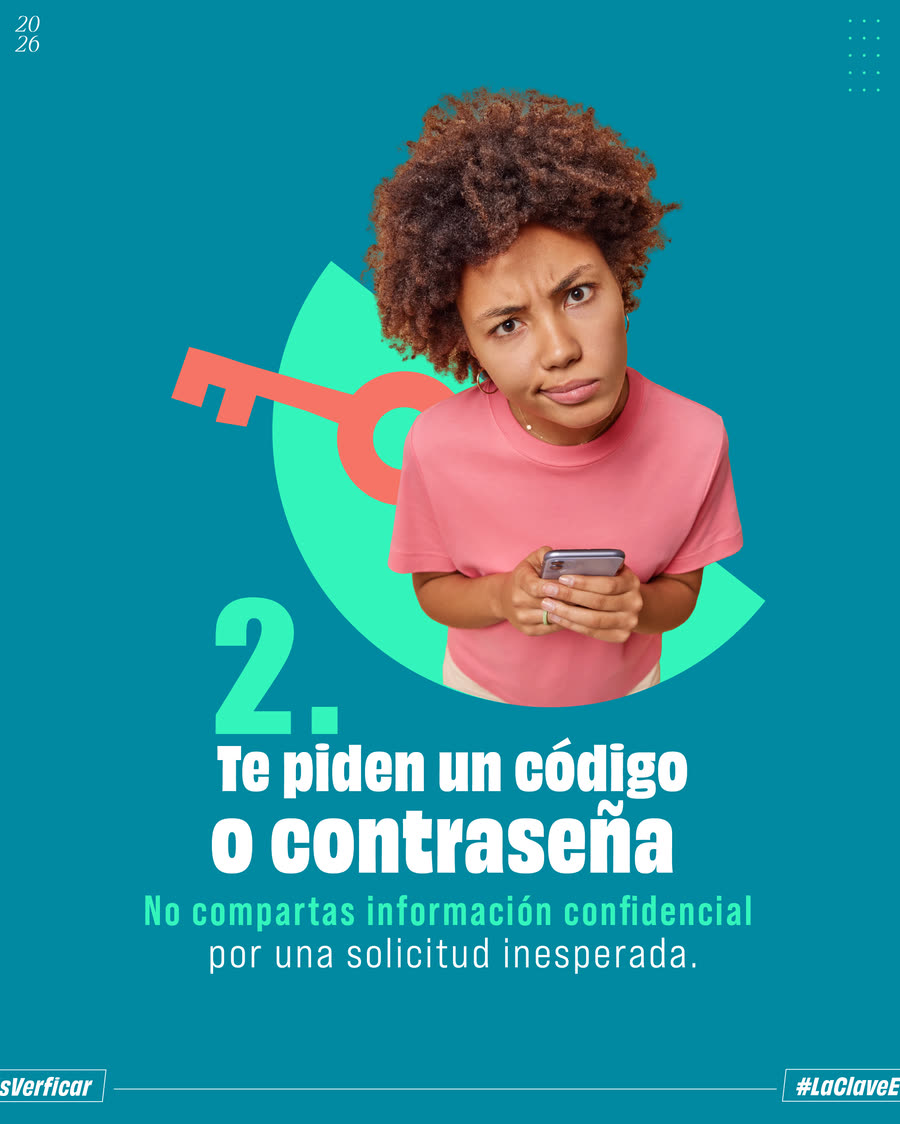
  3. A woman looks at her phone doubtfully next to a key. Text (Spanish): 2. They ask for a code or password. Don’t share confidential information because of an unexpected request.Slide 3 / 7
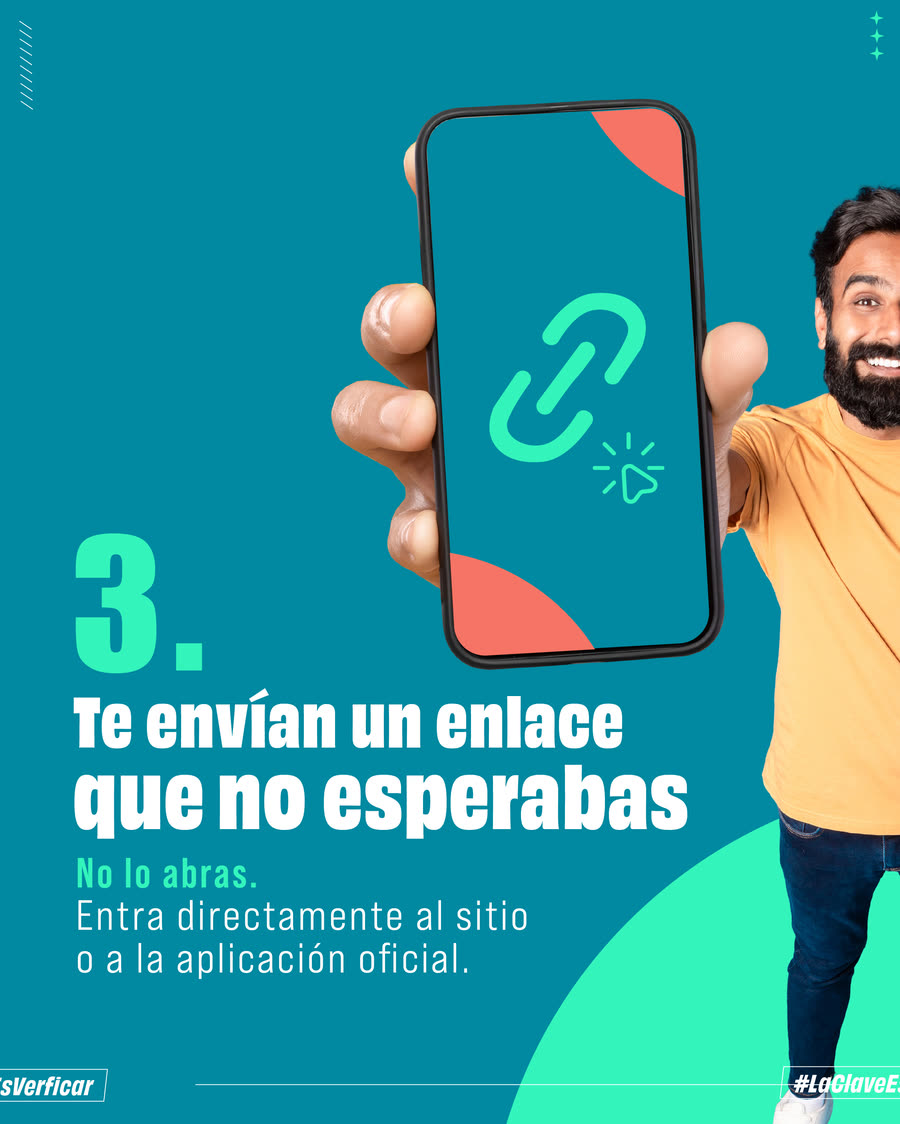
  4. A man holds up a phone showing a link icon. Text (Spanish): 3. They send you a link you weren’t expecting. Don’t open it. Go directly to the official website or app.Slide 4 / 7
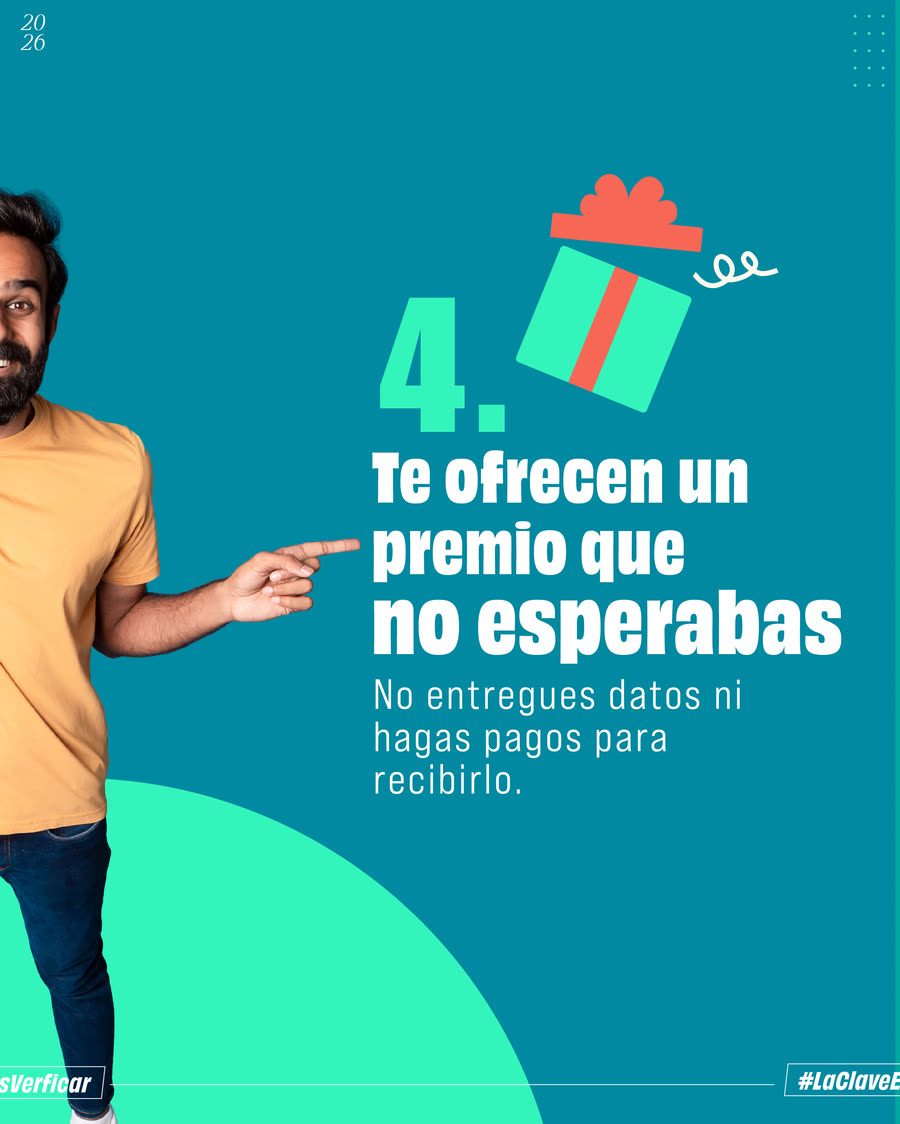
  5. A man points at a gift. Text (Spanish): 4. They offer you a prize you weren’t expecting. Don’t give data or make payments to receive it.Slide 5 / 7
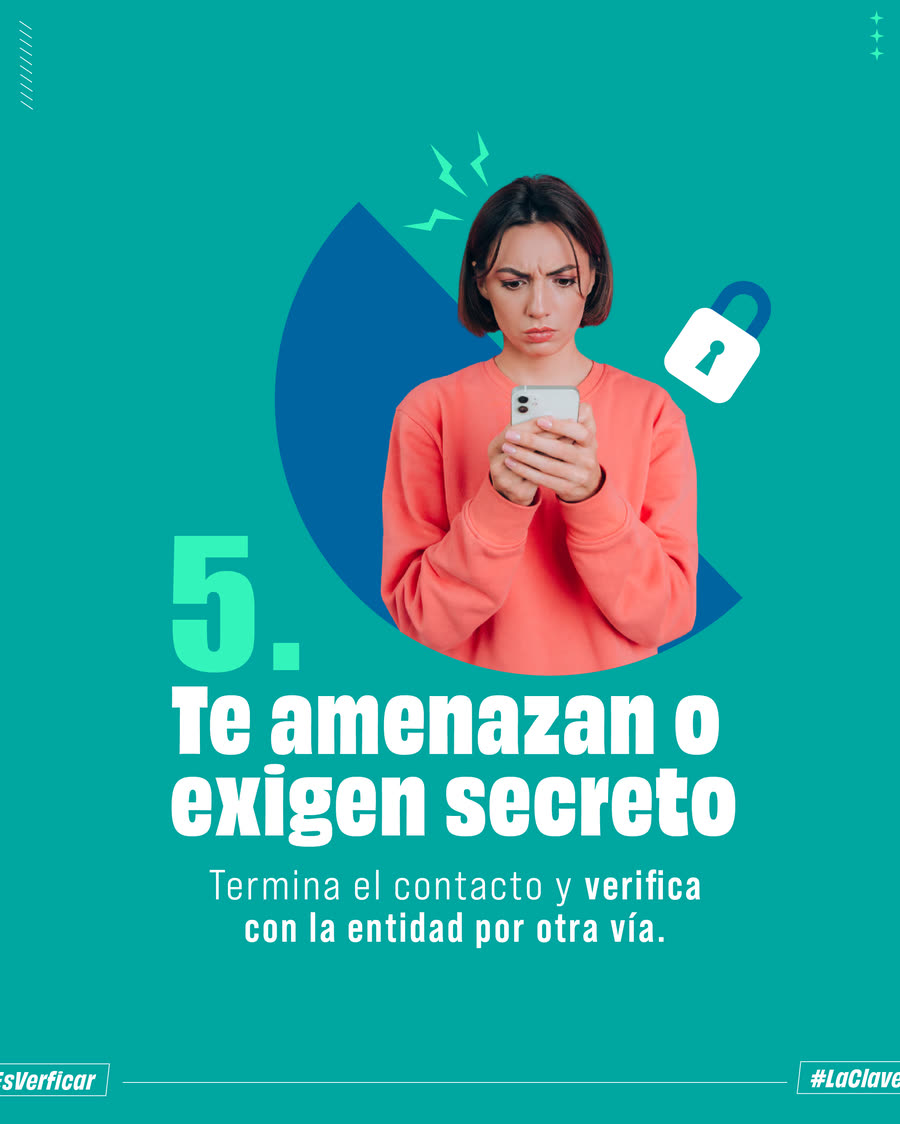
  6. A worried woman looks at her phone next to a padlock. Text (Spanish): 5. They threaten you or demand secrecy. End the contact and verify with the organization another way.Slide 6 / 7
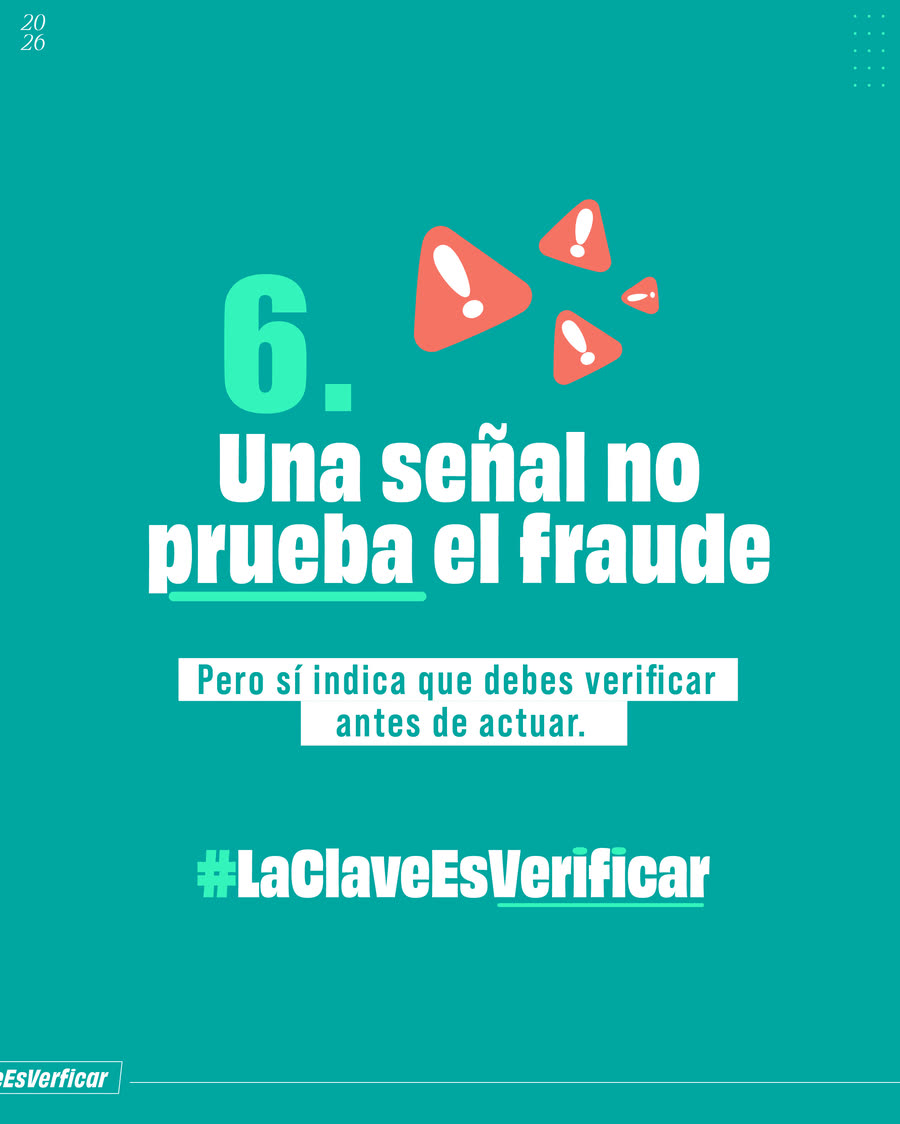
  7. Alert icons. Text (Spanish): 6. One sign doesn’t prove fraud, but it does tell you to verify before you act. #LaClaveEsVerificarSlide 7 / 7
Campaign closing piece. A hand comes out of a phone holding a magnifying glass. Text (Spanish): Before you act, verify. Don’t share data, don’t open unexpected links and don’t make payments during an unexpected communication. End the contact, find an official channel yourself and confirm the request. Report it when appropriate. #LaClaveEsVerificar

#LaClaveEsVerificar

CRC campaign schedule

  1. 1

    Before you reply, stop and verify

    October – December 2026 · Current

  2. 2

    Que parezca real no significa que lo sea

    January – March 2027 · Upcoming

  3. 3

    Tu información tiene valor

    April – June 2027 · Upcoming

  4. 4

    Actuar rápido también protege

    July – September 2027 · Upcoming

Official guidance and reporting routes

Depending on the case:

CaseRoute
Carrier or organization involvedUse the official channel you looked up yourself. Ask for and keep the case number.
Guidance and reporting of digital incidentsSee the National Police CAI Virtual at caivirtual.policia.gov.co. Guidance or an incident report does not replace a formal complaint.
Formal complaintUse the National Police ¡A Denunciar! portal at adenunciar.policia.gov.co in the relevant category, or contact the Attorney General’s Office (Fiscalía): 122 from a mobile phone or 01 8000 919748 from a landline.
Extortion or kidnappingCall the National Police line 165, dedicated to anti-kidnapping and anti-extortion.
Impact on financial productsReport it immediately to your financial institution through its official channels and ask for the case number. You can also go to the Financial Consumer Ombudsman or file a complaint with the Financial Superintendence of Colombia: www.superfinanciera.gov.co.
Misuse of personal dataFirst submit a query or claim to the data controller or processor. Once that process is complete, where appropriate, you can file a complaint with the Superintendence of Industry and Commerce: www.sic.gov.co.
Immediate risk to your safetyCall the emergency line 123.

The CRC provides educational guidance within its remit. It does not receive criminal complaints or replace the National Police, the Attorney General’s Office or the authorities responsible for financial matters, personal data protection and emergency response.

Practice

Can you spot the signs? Test yourself

Fictitious examples. Read each one, decide, then check the answer.

10:24
3XX XXX XXXXMobile

Today · 10:24

BANK: Your account has been BLOCKED. Go NOW to bank-account.example to avoid permanent cancellation.

Text message
Is it fraud? See the answer

Signs of fraud

Urgency, a link you weren’t expecting and an ordinary mobile number. Don’t open the link: go to your bank’s official app or website yourself.

10:24
8XXXXShort code

Today · 10:24

Sample Bank: We recorded a purchase with your card ending in XXXX. If you don’t recognize it, contact your bank through its official channels.

Text message
Is it fraud? See the answer

It can be legitimate

It can be a real alert: it informs you, doesn’t ask for data, codes or payments and has no links. Still, if in doubt, verify by calling a number you look up yourself, not one included in a message.

10:24

Incoming call

+57 3XX XXX XXXX

Unknown number

“This is your mobile carrier. To avoid suspending your line you’ll get a code by text message; please read it to me.”

Is it fraud? See the answer

Signs of fraud

They ask for a code during an unexpected call. Hang up and contact your carrier through its official channel.

10:24
+57 3XX XXX XXXXonline

TODAY

Hi mom, my phone broke and this is my new number. I need you to send me money urgently and don’t tell anyone.

Message
Is it fraud? See the answer

Signs of fraud

Urgency, a request for money and secrecy. End the contact and verify by calling that person’s usual number.

10:24
8XXXXShort code

Today · 10:24

Congratulations! You won a phone. Just pay for shipping here: fake-prize.example

Text message
Is it fraud? See the answer

Signs of fraud

A prize you weren’t expecting that requires a payment. Don’t give data or make payments to receive it.

New rules

What’s changing on your phone

With Resolution 8308 of 2026, the CRC set gradual measures against fraud in calls and text messages:

  • On-screen alerts when a call shows suspicious behavior.
  • Labeling of advertising calls.
  • Messages from banks and companies must identify the registered sender, come from an authorized short code and follow a pre-approved format.
  • After the transition period, messages that cannot be verified will be blocked.

No tool removes the risk or replaces a person’s own verification.

Frequently asked questions

Will Inalambria ask for my code or my details?

No. Inalambria delivers messages on behalf of companies and organizations, but it will never call or text you to ask for passwords, codes or financial data.

Is every marketing or collections message a fraud?

No. Not every commercial, advertising or collections message is fraudulent. If something raises doubts, verify through an official channel you look up yourself.

Does an app or filter fully protect me?

No tool removes the risk or replaces your own verification. Alerts help, but the key is still to stop and verify.

How do I stop receiving advertising messages?

You can register your number for free in the CRC’s Excluded Numbers Registry (RNE). Informational messages about your products, such as bank alerts, will keep arriving.

Where do I report a suspicious call or message?

Depending on the case, use the official guidance and reporting routes on this page: the organization involved through its official channel, CAI Virtual, ¡A Denunciar!, the Attorney General’s Office, line 165, the Financial Superintendence, the SIC or line 123.

How often does this campaign change?

Every quarter, following the CRC’s educational campaign schedule. This page updates automatically with the current campaign.